

A bacterium from the Japanese tree frog’s gut has demonstrated anticancer activity in mice. In a 2025 study, a single injection of Ewingella americana eliminated colorectal tumours in all five treated mice. The bacterium accumulated within tumours and activated immune responses. These findings support further research into bacteria-based cancer therapies, although effectiveness in humans remains untested
Injecting live bacteria into the bloodstream sounds like a recipe for sepsis, not cancer therapy. Yet that is precisely what Japanese scientists did to mice with colorectal tumours, and the results were remarkable. After a single injection, the tumours disappeared in all five treated mice, outperforming the chemotherapy and immunotherapy tested in the same experiment. Strangely, the bacterium came from an unlikely source: the gut microbiota of a Japanese tree frog. Although this is an early experiment in mice, the discovery highlights that nature may harbour powerful anticancer agents in places we have barely begun to explore.
Why a Frog Bacterium Could Matter for Cancer
Why Search for Anticancer Agents in Frogs?
Amphibians have long puzzled cancer scientists. They appear to develop cancer far less often than other animals. In a 2025 study examining over 16,000 animals across 292 vertebrate species, the median prevalence of tumours was just 1.2% among amphibian species, compared with 12% among mammals (Figure 1). Although these figures do not mean that amphibians are cancer-proof, they raise a compelling question: what makes them so resistant to cancer?
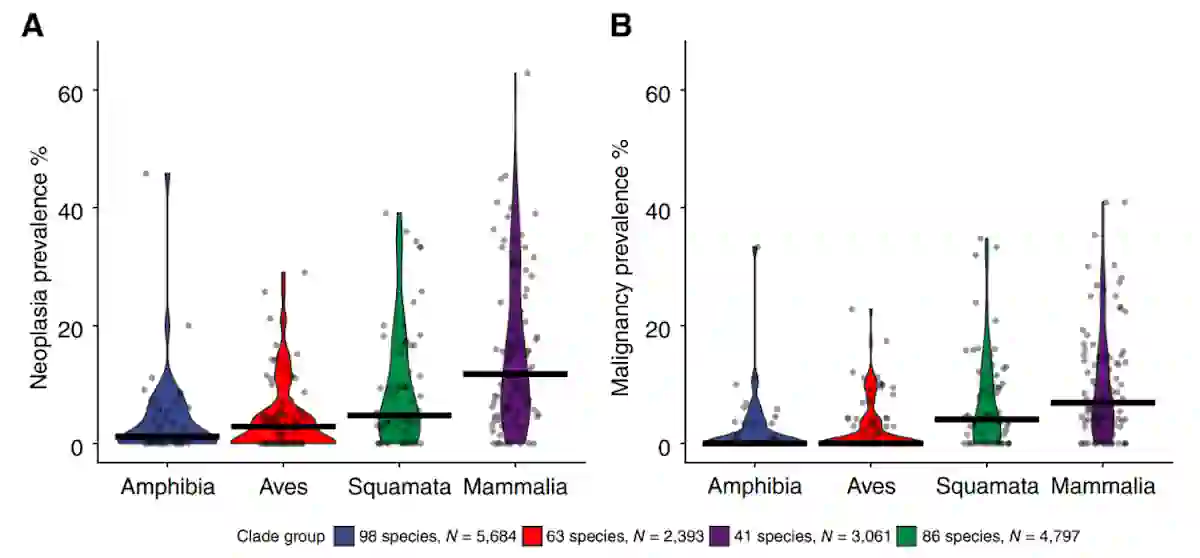
Figure 1. Amphibians develop fewer tumours and cancers than other animals. (A) The median prevalence of tumours was approximately 1.2% in amphibians (Amphibia), 3% in birds (Aves), 5% in lizards and snakes (Squamata) and 12% in mammals (Mammalia). (B) For malignant cancers, the corresponding figures were 0%, 0%, 4% and 7%, respectively. Each grey dot represents a species, while the black horizontal lines indicate the median prevalence for each animal group. Source: Compton et al. (2025), Cancer Discovery.
One plausibility lies in their extraordinary ability to regenerate. Certain amphibians, such as salamanders and newts, can regrow entire limbs, rebuilding bones, muscles and skin after an injury. This requires rapid cell growth, yet unlike cancer, the growth remains controlled and eventually stops once regeneration is complete. Intriguingly, experiments have shown that certain regenerating tissues in newts, including limbs and parts of the eye, can resist tumour formation even when exposed to potent cancer-causing chemicals. These findings suggest that the mechanisms controlling regeneration may also protect against cancer.
Amphibians have also yielded promising anticancer compounds. Their skin secretions contain antimicrobial peptides that can kill cancer cells. More impressively, an enzyme called ranpirnase, originally isolated from leopard frog eggs, has demonstrated sufficient anticancer potential to enter phase III clinical trials. Even extracts from regenerating salamander limbs have been found to halt the growth of leukaemia cells in laboratory experiments. Although these discoveries have not translated into an established cancer therapy in humans, they reveal that amphibians may harbour a wealth of bioactive substances worth exploring.
While scientists have explored substances produced by amphibians themselves, another potential source of anticancer agents remains largely untapped: the microorganisms living inside them, i.e., microbiota. Like humans, amphibians and reptiles harbour diverse bacterial communities in their gut. However, their different diets, habitats and evolutionary histories mean that these microbial communities differ considerably from our own. Could some of these unexplored microorganisms possess unique abilities, including the power to fight cancer?
The Potent Anticancer Bacterium Found in a Frog’s Gut
In a study published in December 2025, Iwata et al. at the Japan Advanced Institute of Science and Technology collected gut bacteria from three local animals: Japanese tree frog, fire-bellied newt and grass lizard. They isolated 45 bacterial strains and screened them for safety in mice. Nine passed the initial screening and were subsequently tested for their anticancer capacity. For this purpose, the scientists injected each bacterial strain into mice with colorectal tumours to see whether the bacteria could slow or reverse cancer growth.
Eight of the nine bacterial candidates significantly suppressed tumour growth, while three caused the tumours to disappear altogether. However, the cancer soon returned in mice treated with two of these bacteria. This means that the only standout was a bacterium called Ewingella americana, isolated from the Japanese tree frog (Figure 2), which achieved sustained tumour regression after just one injection.
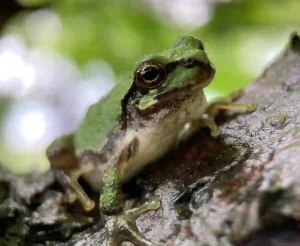
Figure 2. The Japanese tree frog (Dryophytes japonicus). Source: Norio Nomura
To investigate further, the scientists compared E. americana against two established types of cancer therapies: chemotherapy (liposomal doxorubicin) and immunotherapy (anti-PD-L1 antibody). Remarkably, all five mice treated with E. americana achieved complete tumour regression, compared with only one of the five receiving immunotherapy and none receiving chemotherapy. Moreover, the bacterial treatment required only a single injection, whereas both chemotherapy and immunotherapy were administered four times each (Figure 3).
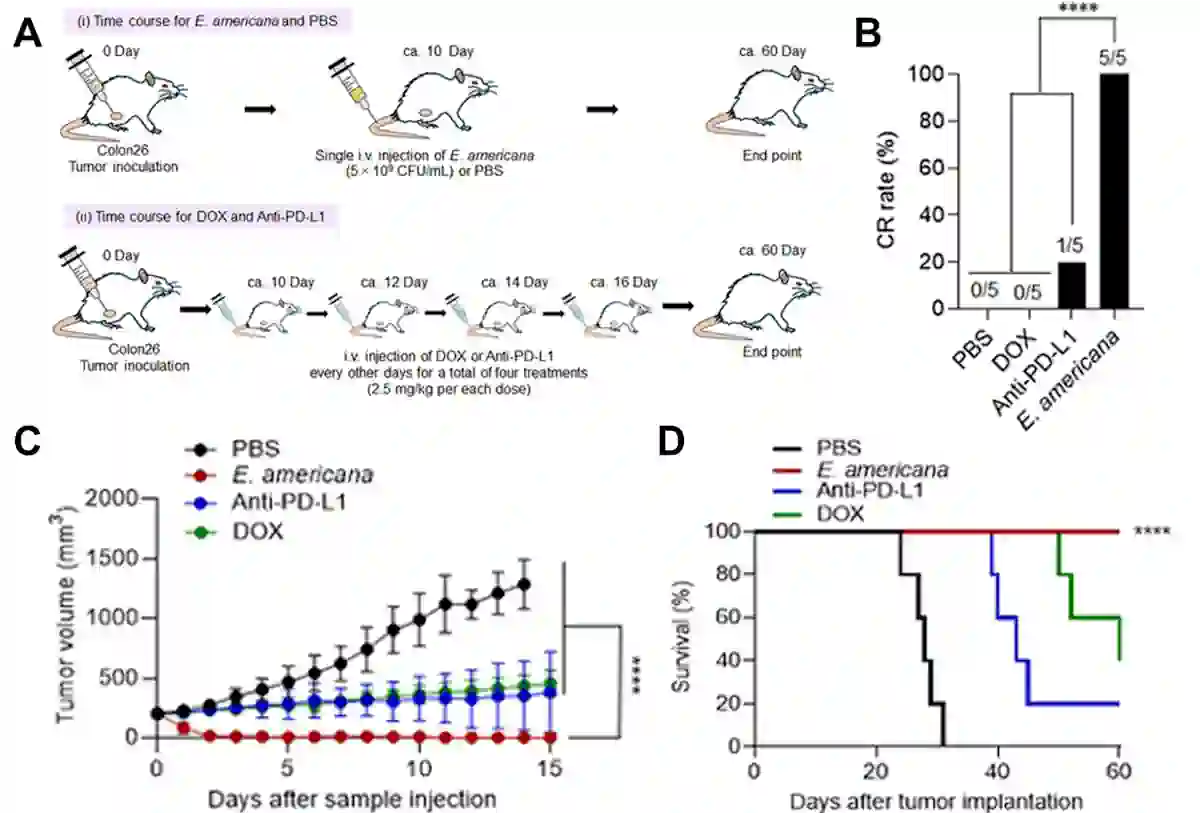
Figure 3. A single injection of frog-derived E. americana eliminated colorectal tumours in mice, outperforming chemotherapy and immunotherapy. (A) Treatment schedules for E. americana, doxorubicin (DOX) chemotherapy and anti-PD-L1 immunotherapy. (B) Complete tumour regression occurred in all five mice treated with E. americana, compared with one of five receiving immunotherapy and none receiving chemotherapy. (C) Tumours rapidly disappeared following bacterial treatment, whereas the other treatments mainly slowed tumour growth. (D) All mice receiving E. americana survived to the end of the 60-day study, compared with 40% receiving chemotherapy and 20% receiving immunotherapy. Note: Phosphate-buffered saline (PBS) represents the untreated control group. Source: Adapted from Iwata et al. (2025), Gut Microbes.
The scientists took a step further and conducted a separate experiment in which they reintroduced colorectal cancer cells into mice that had been cured by E. americana. Remarkably, none of the previously treated mice developed new tumours, whereas all untreated mice did. This suggests that the bacterium may have generated lasting anticancer immunity, allowing the mice to resist the cancer even after their original tumours had disappeared. This also raises the possibility that such an approach could one day help prevent cancer recurrence.
These findings are extraordinary by preclinical research standards. Many experimental treatments show promise simply by slowing tumour growth, whereas complete tumour regression after a single injection is an outstanding achievement. For instance, in a 2019 analysis of 637 cancer treatment tests in mice, only 10 (1.6%) produced complete tumour response. Moreover, the development of lasting anticancer immunity makes the results even more compelling. Although the study involved only small groups of mice and one tumour model, it highlights the huge potential of using frog-derived bacteria to fight cancer.
Decoding the Frog Bacterium’s Anticancer Mechanisms
How could a bacterium accomplish all this? Further experiments revealed that E. americana can attack cancer in two ways: by directly killing tumour cells and by mobilising the body’s own immune defences. But first, it had to reach the tumours.
E. americana belongs to a group of bacteria known as facultative anaerobes, which can survive and multiply even when oxygen is scarce. As it happens, solid tumours often contain oxygen-poor regions, as their rapidly growing cells outpace the blood supply. These conditions may provide an ideal environment for E. americana to thrive, which may explain why it targets and accumulates within tumours rather than healthy tissues. Iwata et al. found that bacterial numbers inside tumours increased by about 3,000-fold between three and 24 hours after injection, while no detectable bacterial colonisation was found in the major healthy organs examined.
Once inside the tumours, E. americana may attack cancer cells directly. To investigate this, the scientists grew small clumps of colorectal cancer cells and exposed them to the bacterium. At the highest concentration tested, the bacterium largely destroyed these clumps within just 24 hours. When the scientists examined tumour tissues from treated mice, they also observed widespread signs of cell death, consistent with direct cancer-killing effects.
Direct killing was only half the story. The bacterium also triggered a robust immune response. Within six hours of injection, the scientists detected increased expression of immune-related genes within the tumours. Closer inspection revealed an influx of immune cells, particularly neutrophils, T cells and B cells. These immune cells normally help the body recognise, attack and eliminate threats, including cancer. Such findings indicate that the frog-derived bacterium may have rallied the body’s own immune defences to attack the cancer.
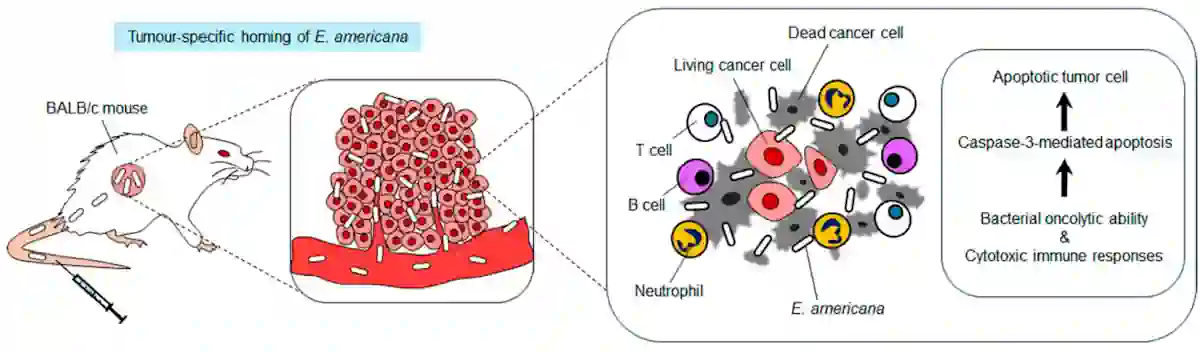
Figure 4. Proposed anticancer mechanism of the frog-derived bacterium, E. americana. After being injected into the bloodstream, E. americana preferentially accumulates and multiplies within tumours. Once there, it may attack cancer cells in two ways: by directly damaging them and by recruiting immune cells, including T cells, B cells and neutrophils, to destroy the tumour. Together, these effects promote cancer cell death and may explain the remarkable tumour regression observed in mice. Source: Iwata et al. (2025), Gut Microbes.
Overall, these findings suggest that E. americana possesses a remarkable combination of anticancer properties: it preferentially accumulates and multiplies within tumours, where it may launch a powerful two-pronged attack by destroying cancer cells while rallying the body’s immune defences against them (Figure 4). This synergistic combination may explain why a single injection achieved complete tumour regression in mice, and why previously cured mice resisted the cancer when it was reintroduced.
Could This Frog Bacterium Work in Humans?
The results are undoubtedly promising, but the major question is whether E. americana could ever be used safely and effectively to treat cancer in humans.
Encouragingly, E. americana is safe at the effective dose in mice. Iwata et al. found that the bacterium became undetectable in the bloodstream within 24 hours, despite multiplying rapidly inside tumours. Blood tests and organ examinations revealed no signs of tissue damage or abnormal inflammation. However, the study used young mice with intact immune systems. As such, it cannot guarantee the safety of E. americana in cancer patients, whose immune systems may already be weakened by cancer, its therapies or ageing.
More concerningly, the dose that eliminated the tumours in mice was also the maximum tolerated dose. The study by Iwata et al. reported that higher doses caused acute mortality in mice, highlighting a careful margin between an effective therapy and a potentially dangerous one. Moreover, E. americana is not entirely harmless. A 2024 review identified 19 reported cases of human infections involving E. americana, including bloodstream infections and sepsis. Although these cases do not establish whether the frog-derived bacterial strain poses similar risks, they emphasise the need for careful safety testing in humans.
Nevertheless, the concept of using live bacteria to fight cancer is not unheard of. For decades, doctors have used a weakened bacterium called Bacillus Calmette-Guérin (BCG) to treat certain types of bladder cancer. Instead of injecting it into the bloodstream, doctors introduce BCG directly into the bladder (intratumoural) through a small tube, where it stimulates the immune system to attack cancer cells and helps prevent recurrence. It is a well-established example of how bacteria can be safely harnessed against cancer in humans.
Nevertheless, the concept of using live bacteria to fight cancer is not unheard of. For decades, doctors have used a weakened bacterium called Bacillus Calmette-Guérin (BCG) to treat certain types of bladder cancer. Instead of injecting it into the bloodstream, doctors introduce BCG directly into the bladder (intratumoural) through a small tube, where it stimulates the immune system to attack cancer cells and helps prevent recurrence. It is a well-established example of how bacteria can be safely harnessed against cancer in humans.
Interestingly, scientists are also exploring other bacteria as potential cancer therapies. For example, a 2025 phase I clinical trial tested Clostridium novyi-nontoxic, a weakened bacterium that thrives in oxygen-poor environments, alongside immunotherapy. Similar to BCG, the bacterium was injected directly into the tumour. Among 16 patients with advanced cancers, four experienced tumour shrinkage. The therapy combination also had an acceptable safety profile. While the small trial cannot establish how much of the benefit came from the bacterium, it provides early evidence for the potential of bacteria-based cancer therapies.
As for E. americana, important questions remain. The Japanese study involved small groups of mice with just one type of tumour model. Whether the bacterium could achieve similar results against other cancers, or work safely and effectively in humans, remains unknown. For now, the frog bacterium remains an experimental discovery rather than an established cancer therapy. Still, it offers a compelling glimpse of how largely unexplored microorganisms might one day become powerful allies in the fight against cancer.